Physical Address
304 North Cardinal St.
Dorchester Center, MA 02124
Physical Address
304 North Cardinal St.
Dorchester Center, MA 02124

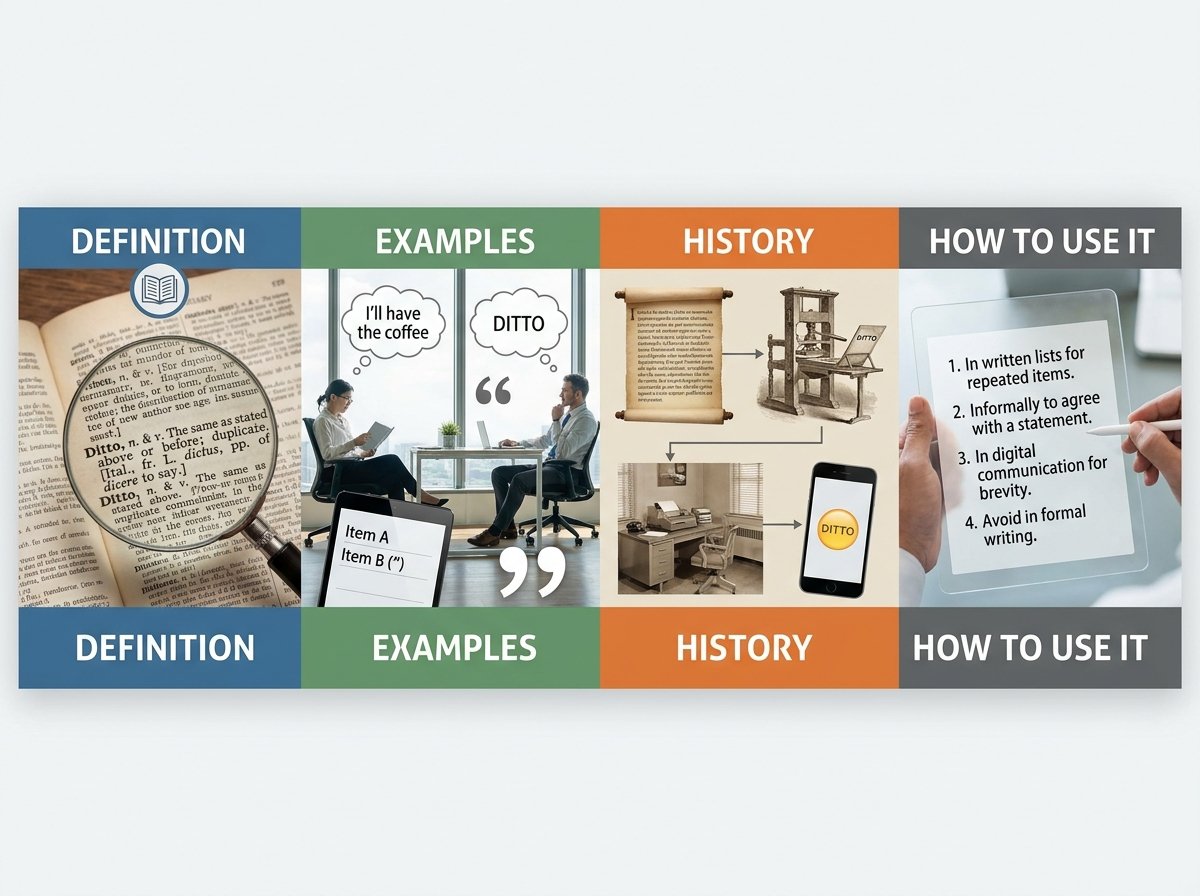
Sometimes you agree with someone so completely that repeating their words feels unnecessary. That’s where “ditto” fits.
The word can mean “the same,” “me too,” “same here,” or “I agree,” depending on the situation. You’ll see it in conversations, text messages, social media comments, workplace chats, and written records.
This guide explains the ditto meaning, its history, common uses, alternatives, and the situations where another phrase may sound better.
50+ But Synonym: Meanings, Examples, and Better Alternatives
Ditto means the same as something previously said, written, or mentioned. It can refer to an identical fact, repeated information, or a shared opinion.
In everyday conversation, people often use it to express:
For example:
“I’m exhausted after that flight.”
“Ditto.”
The second speaker means, “I’m exhausted too.” The word avoids repetition while still showing agreement.
Maya: “I could really use a quiet weekend.”
Jordan: “Ditto.”
Here, “ditto” communicates the same feeling. It works because Jordan’s reply clearly refers to Maya’s statement.
The word can also describe repeated information in writing:
Alex’s address: 18 Oak Street
Taylor’s address: Ditto
In that example, “ditto” means Taylor has the same address listed above.
No, ditto doesn’t have a full form. It isn’t an acronym or shortened phrase. It’s a complete English word.
When someone asks for the “full form of ditto,” they may assume it works like an abbreviation. However, the word already stands on its own. Its basic meaning is “the same as previously stated.”
In informal speech, that idea often becomes “me too” or “same here.” In written records, it may indicate that the information above should be repeated.
The modern ditto definition is simple: it signals that you share or repeat the previous statement.
People use it as a quick conversational expression after someone mentions:
For example:
“That was the best burger I’ve had all year.”
“Ditto.”
The reply means, “I have the same opinion.” It doesn’t necessarily mean the speakers agree about every detail. It usually applies only to the statement immediately before it.
In grammar, “ditto” can function as a noun, adverb, or interjection, depending on the sentence. In everyday speech, though, most people simply use it as a short response.
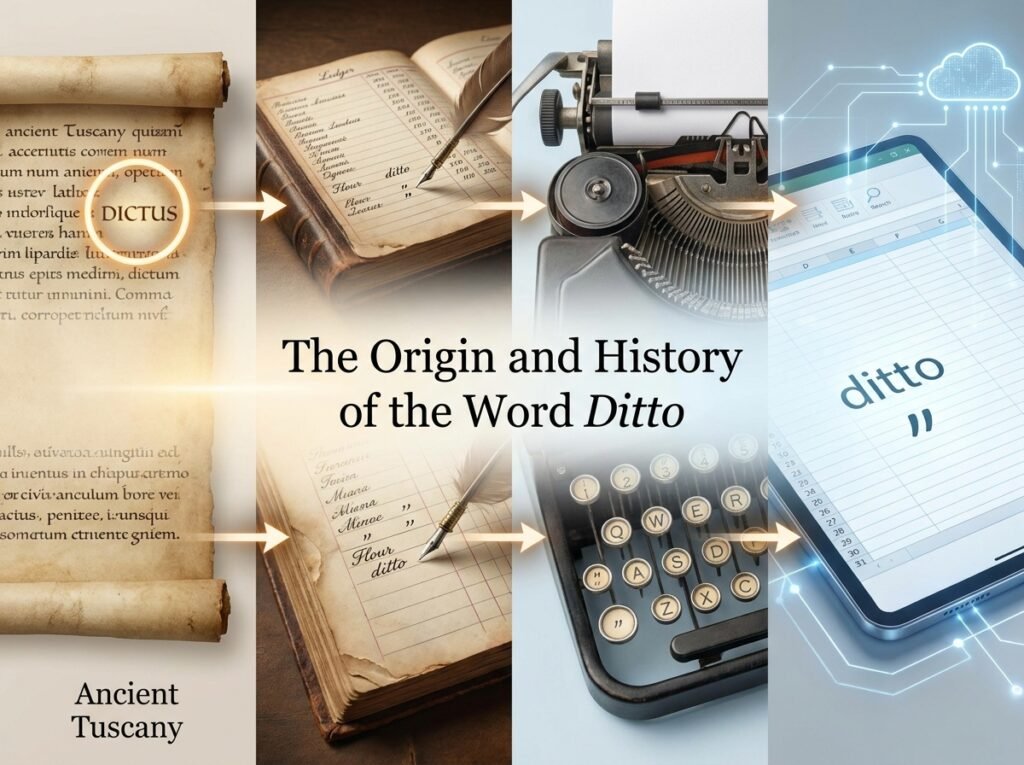
The word “ditto” comes from the Italian word detto, meaning “said.” It entered English through written records and commercial bookkeeping.
Clerks used it to avoid writing the same information repeatedly. For instance, if several entries shared the same description, a writer could use “ditto” instead of copying the wording again.
That older use still appears in documents, lists, and records. Over time, the word moved beyond bookkeeping and became part of spoken English.
Today, it has two closely related roles:
The basic idea has stayed consistent: something is the same as what appeared before.
The meaning of ditto can shift slightly with context and tone. In a casual conversation, it often feels friendly and efficient. In a formal document, it may simply mark repetition.
Consider these examples:
“I’m ready for the weekend.”
“Ditto.”
This expresses a shared feeling.
“Please send the revised file by Friday.”
“Ditto for the budget summary.”
Here, the second sentence means the same deadline applies to the budget summary.
You can also use it in group chats, gaming communities, social media comments, and everyday spoken English. However, the surrounding conversation should make the reference obvious.
Ditto Meaning Ditto Meaning Ditto Meaning Ditto Meaning Ditto Meaning Ditto Meaning Ditto Meaning Ditto Meaning Ditto Meaning Ditto Meaning Ditto Meaning Ditto Meaning Ditto Meaning Ditto Meaning Ditto Meaning Ditto Meaning Ditto Meaning Ditto Meaning Ditto Meaning
Although the word seems straightforward, people sometimes use it in the wrong situation.
First, “ditto” doesn’t answer every question. If someone asks, “What time should we meet?” you need to provide a time. Replying “ditto” only works if another person has already suggested a time you want to repeat.
Second, it doesn’t always mean “yes.” It usually means that your position matches the previous statement.
Finally, a one-word reply can sound dismissive when the topic is serious. If someone shares painful news, “ditto” may appear careless, even if you mean that you understand.
A fuller response often works better:
“I know what you mean. I’ve felt that way too.”
Context and tone matter more than the word itself.
Several phrases can replace “ditto,” but each carries a slightly different tone.
For example, “Same” may feel natural in a group chat, while “I agree” usually sounds better during a business discussion.
You don’t always need to respond to “ditto.” It may simply confirm that the other person agrees with you.
If you want to continue the conversation, add a question or suggestion:
“I’m starving.”
“Ditto.”
“Want to grab tacos?”
You can also acknowledge the shared feeling:
“Looks like we’re both ready for a break.”
In a workplace conversation, treat it as a sign of agreement and move forward:
“Ditto.”
“Great, then we’ll use that plan.”
A useful response depends on whether you want to close the topic or keep it moving.
“Ditto” is widely understood in American English and other varieties of English. Its basic meaning remains stable across regions.
However, age and setting can influence how it sounds. Some speakers consider it slightly old-fashioned, while others use it regularly in casual conversation. Younger people may choose “same” more often in digital messages.
The word also appears in international online communities, especially where English serves as a shared language. Its short form makes it easy to understand in gaming chats and social media discussions.
Pronunciation and tone can also change its effect. A warm, playful “Ditto!” sounds different from a flat one-word reply. The meaning stays similar, but the emotional impression may not.
These expressions overlap, but they aren’t interchangeable in every situation.
| Expression | Typical tone | Common use |
| Ditto | Casual or neutral | Matching a previous statement |
| Same | Very casual | Texts, comments, and quick reactions |
| Me too | Personal and direct | Sharing a feeling or experience |
| Same here | Friendly | Expressing a matching situation |
| I agree | Clear and professional | Meetings, messages, and discussions |
| Exactly | Strong agreement | Emphasizing a specific point |
| Likewise | Polite | Returning a feeling or sentiment |
For example, after someone says, “I love rainy afternoons,” both “ditto” and “me too” work well.
After someone says, “Have a great evening,” “Likewise” sounds more natural than “me too.” The best choice depends on what you’re matching.
In text messages, ditto usually means “same,” “me too,” or “I feel the same way.” It’s a quick way to agree without typing a complete sentence.
Examples include:
“I need coffee before I answer emails.”
“Ditto.”
“That meeting lasted forever.”
“Ditto 😩”
The word can sound playful, neutral, or slightly dry depending on punctuation and emojis. Adding a second sentence can make your meaning clearer:
“Ditto! I’m ready to leave.”
A one-word text works best when the previous message expresses an obvious opinion, feeling, or experience.

On social media, “ditto” often appears as a short comment showing shared enthusiasm or frustration.
“I can’t stop listening to this album.”
“Ditto!”
On dating apps, it can confirm a shared interest:
“I’m always looking for new hiking trails.”
“Ditto! What’s your favorite local route?”
That response is more effective than simply writing “ditto” because it keeps the conversation open. A short agreement shows common ground, but a follow-up question shows genuine interest.
If every reply consists of one-word reactions, the conversation may feel flat. Use “ditto” as a starting point, not your entire communication style.
“Ditto” can seem dismissive when someone expects empathy, detail, or emotional support.
For example:
“I’m worried about losing my job.”
“Ditto.”
Although the speaker may mean, “I’m worried too,” the response could sound abrupt. A more considerate answer would be:
“I’m worried about that too. Do you want to talk through it?”
The word may also cause confusion when several statements appear in a conversation. If the reference isn’t obvious, repeat the key idea instead.
Clear communication matters more than saving a few words.
“Ditto” is acceptable in relaxed workplace communication, especially in internal chats or informal team discussions.
For example:
“I support moving the deadline.”
“Ditto.”
However, formal emails, reports, contracts, and client communications usually benefit from more precise wording. Consider these alternatives:
In business documents, clarity should come first. “Ditto” may be understood, but a direct sentence reduces ambiguity.
Use “ditto” when the previous statement is clear and you want to express quick agreement or repetition.
It works especially well when:
Avoid it when you need to explain your reasoning, answer a specific question, or respond sensitively to emotional news.
A simple test helps: if the other person can immediately tell what you’re agreeing with, “ditto” probably works.
In casual messages, “ditto” can sound natural and friendly:
“I’m craving pizza tonight.”
“Ditto. Pepperoni?”
“That episode was wild.”
“Ditto! I didn’t see the ending coming.”
It also works in social media comments and gaming chats. Because it’s short, you can respond quickly without interrupting the conversation.
Still, adding a few words often makes the exchange more engaging.
Informal internal messages may use “ditto” to confirm agreement:
“I recommend sending the update this afternoon.”
“Ditto. The client should have the information before tomorrow.”
In formal records, however, write the repeated information clearly. For example:
“The same deadline applies to the second project.”
This wording helps readers who may not have seen the earlier sentence. It also avoids ambiguity in business documents and written communication.
“Same” often feels more relaxed than “ditto,” especially in texting and social media comments.
“I have no idea what I’m doing today.”
“Same.”
“Me too” works best when you share a personal feeling, experience, or action:
“I’ve been to Chicago three times.”
“Me too.”
“Ditto” remains perfectly correct, but the alternatives may better match your relationship with the reader and the mood of the exchange.
“Ditto” means the same as what someone just said, wrote, or mentioned. It can also mean “me too” in conversation.
No. Ditto is a complete word, not an abbreviation or acronym. Its basic meaning is “the same as previously stated.”
Use ditto after a statement you want to match, such as, “I’m ready to leave.” “Ditto” means you feel the same.
Usually, yes. Both express shared feelings or experiences, although “me too” sounds more direct and personal.
In texting, ditto commonly means “same,” “same here,” or “I agree.” It provides a quick response to a previous message.
It can work in informal workplace chats, but formal emails, reports, and contracts usually need clearer wording.
It can sound dismissive during serious conversations. Add empathy or explanation when someone shares emotional or sensitive information.
Both show agreement, but “same” usually sounds more casual. “Ditto” can also refer to repeated information in writing.
Ditto comes from the Italian word detto, meaning “said.” Writers used it to repeat information in records and lists.
The ditto meaning is straightforward: it indicates that something is the same as what came before.
In conversation, it can mean “me too,” “same here,” or “I agree.” In written records, it can replace repeated information. The word works well in casual chats, social media comments, and informal team messages.
However, context matters. A quick “ditto” may be perfect after a lighthearted comment, but sensitive conversations deserve a more thoughtful reply. For formal documents, direct wording usually provides better clarity.
Used thoughtfully, “ditto” is a convenient and natural way to show agreement without repeating yourself.