Physical Address
304 North Cardinal St.
Dorchester Center, MA 02124
Physical Address
304 North Cardinal St.
Dorchester Center, MA 02124


The Tristan name meaning Bible is full of spiritual depth. Many parents want to know what Tristan means in a Christian context. The Tristan meaning in the bible shows that it comes from the Latin word tristis, which means “sorrowful.” But the meaning goes beyond sadness. It represents strength, faith, and hope through difficult times.
Even though Tristan is not directly in the Bible, the tristan meaning in bible connects to important Christian principles. It reminds us that sorrow can lead to joy. It reflects endurance, courage, and God’s guidance. Parents often choose Tristan because it has a strong spiritual message.
The Tristan name meaning Bible also carries history. It has Celtic roots and has been used by Christian families for centuries. Choosing Tristan declares faith and values in a child’s life.
The Tristan name meaning Bible carries a profound spiritual meaning for many Christian families. While Tristan does not appear directly in any biblical text, its significance resonates with Christian principles. Derived from the Latin word tristis, meaning “sorrowful,” Tristan reflects themes of endurance, transformation, and faith through hardship. In this sense, Tristan biblical meaning aligns closely with the journey many biblical figures undertook, from grief and struggle to hope and redemption.
In Christianity, names are more than labels, they convey identity, character, and even spiritual destiny. Tristan embodies the idea that sorrow can lead to growth, echoing the biblical principle of perseverance (Romans 5:3-4). It symbolizes courage, resilience, and unwavering faith in God’s plan. Christian parents often choose Tristan because it honors these virtues, making it a meaningful choice among popular Christian names.
Tristan’s spiritual meaning also emphasizes the redemptive power of God. Like Job or David, whose lives turned sorrow into triumph, Tristan reflects the biblical principle that challenges can strengthen character and faith. The name becomes a living testament to hope, endurance, and divine guidance in a child’s life.
Read Also: Prayers for Bobby The True Story That Moved Audiences Worldwide
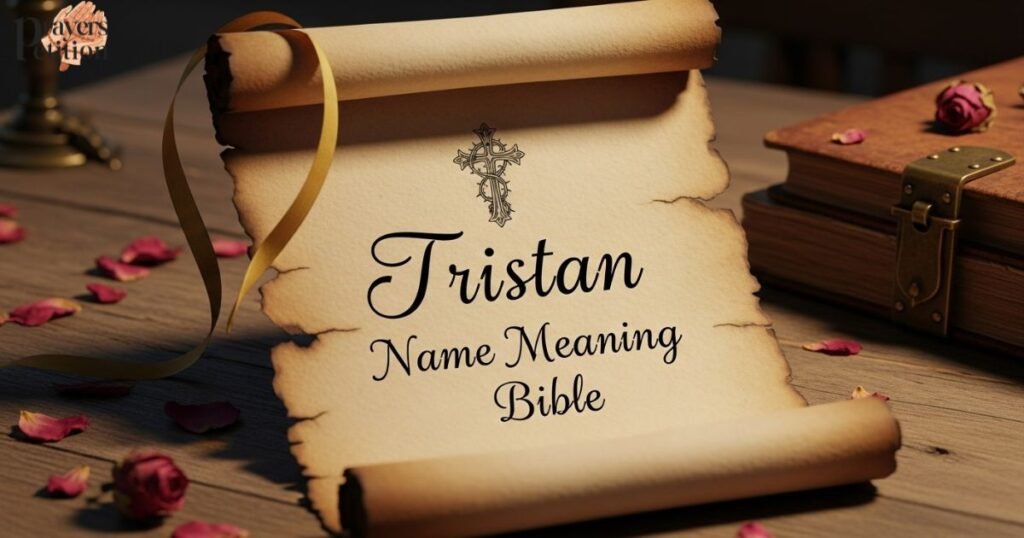
Tristan has rich historical roots that stretch back to both Celtic and Latin traditions. Its Latin origin, tristis, means “sad” or “sorrowful,” while its Celtic roots tie it to medieval legends and Christian storytelling. Tristan Celtic roots highlight the name’s longstanding association with heroism, loyalty, and spiritual devotion. Medieval manuscripts document Tristan in Christian monastic records, showing that even outside the Bible, the name was integrated into religious life.
Historical Tristan name usage reflects a fascinating evolution:
| Time Period | Cultural Origin | Meaning Evolution |
| 5th Century | Celtic Britain | Tumult, sorrow, and outcry |
| 12th Century | French Literature | Noble, brave knight |
| 15th Century | Christian Adoption | Faithful servant |
| Modern Era | Global Christianity | Strength through adversity |
Over time, Tristan name meaning Bible variations such as Tristen, Trystan, and Tristian appeared across Europe, maintaining the core essence of the name while adapting to local languages. The Welsh version, Drystan, is especially noted in Celtic Christian histories.
The historical Tristan name symbolizes more than just a cultural identity, it represents a spiritual legacy. From monastic scribes to Christian knights, the name Tristan became intertwined with faith, courage, and devotion. Its cultural significance persists today, making Tristan a timeless choice for parents seeking biblical names for boys and Celtic Christian names alike.
Tristan does not appear directly in any Bible verse. Many parents searching for biblical names for boys wonder if Tristan has scriptural roots. While the name itself isn’t in the Bible, that doesn’t lessen its spiritual impact. The absence of Tristan in scripture is similar to other popular Christian names, like Christopher or Stephanie, which carry meaningful Christian symbolism without being biblical characters.
Christian naming principles focus on meaning, character, and prophetic significance rather than literal appearance in scripture. Tristan aligns beautifully with these biblical principles of names. Its themes, endurance through sorrow, hope after grief, and transformation through faith, mirror lessons from numerous biblical stories. Choosing Tristan allows parents to declare a child’s spiritual identity while honoring Christian traditions.
Tristan biblical meaning may not be literal, but the name resonates deeply with biblical concepts of faith, courage, and perseverance. Many families embrace Tristan for its symbolic connection to the journey from sorrow to joy, reflecting God’s work in their lives.
Even though Tristan doesn’t appear in the Bible, several scriptural themes are reflected in its meaning:
These biblical themes make Tristan a spiritually rich choice for Christian families. It embodies faith that transforms grief into perseverance, reflecting the journey of many biblical figures who endured hardship but trusted God’s plan.
The spiritual significance of Tristan goes beyond its literal meaning of “sorrowful.” Tristan name meaning Bible spiritual meaning emphasizes transformation, resilience, and divine guidance. In Christianity, names often declare spiritual destiny, and Tristan becomes a statement of faith that a child will overcome challenges through God’s strength.
Tristan name symbolism mirrors the Christian life: struggles are temporary, but faith, courage, and hope are eternal. The name invokes the biblical principle that God shapes character through trials, much like a potter molds clay. Parents naming their child Tristan often pray that their child grows into a life of spiritual strength, compassion, and perseverance.
In addition, Tristan and grief meaning resonates deeply with the biblical teaching that mourning leads to comfort (Matthew 5:4). The name becomes a living reminder that sorrow has a purpose and that every season of difficulty can lead to spiritual maturity. Tristan embodies a legacy of faith, courage, and steadfast devotion to Christian values.
Choosing Tristan name meaning Bible as a Christian baby name involves more than liking the sound. Parents often consider biblical principles of names, spiritual significance, cultural heritage, and modern popularity. Tristan meets multiple criteria for a meaningful Christian name:
Parents naming their child Tristan often see it as a way to declare spiritual identity prophetically. The name encourages a life aligned with Christian values, turning sorrowful origins into a legacy of strength, hope, and devotion.
Tristan name meaning Bible is well-known from medieval Arthurian legends, where he appears as a noble knight in tales of love and valor. While these stories are captivating, they are distinct from biblical accounts. Christian parents sometimes worry that legendary associations might conflict with faith-based naming.
Understanding the distinction helps: the legendary Tristan represents qualities like loyalty, bravery, and sacrifice, which complement the Christian spiritual meaning of the name. These qualities enhance Tristan name symbolism without contradicting biblical principles.
For example, the knight’s devotion mirrors Christ-like faith, while his challenges reflect human struggles overcome through courage. This combination of historical narrative and Christian faith gives Tristan both a cultural richness and spiritual depth.
Tristan name meaning Bible connects to Christianity through symbolic interpretations and cultural heritage. The name reflects sorrow transformed into joy, resilience in adversity, and spiritual courage, values celebrated in biblical narratives and Christian tradition.
This combination of symbolism and cultural significance makes Tristan a name that is not only historically rich but spiritually purposeful. It links personal identity to a broader Christian heritage, blending faith, story, and character.
For parents seeking Tristan alternatives or complementary biblical names, several options share similar spiritual themes of endurance, hope, and transformation:
| Name | Biblical Reference | Meaning & Connection to Tristan |
| Job | Book of Job | Persecuted, endured great suffering faithfully |
| Jeremiah | Book of Jeremiah | God will uplift, prophet of sorrow and hope |
| Nehemiah | Book of Nehemiah | Comforted by God, rebuilt after adversity |
| Thomas | Gospel of John | Twin, doubted then believed, transformation |
| Lazarus | Gospel of John | God has helped, from death to life |
These names align with Tristan’s spiritual significance, highlighting perseverance, faith, and transformation through trials. Like Tristan, they carry biblical principles of names, reflecting character, destiny, and God’s purpose, even if they are not directly associated with legends or medieval tales.
Parents may also consider Tristan variations or nicknames, such as Tristen, Tristian, or Trystan, to honor family heritage while keeping the biblical symbolism intact.
Christian parents often select Tristan for its spiritual depth and meaningful symbolism. Beyond its melodic sound, Tristan carries a message of faith, resilience, and divine purpose. The name aligns with biblical principles, representing courage in the face of adversity, hope through sorrow, and transformation through God’s guidance.
Top reasons parents choose Tristan include:
Choosing Tristan becomes an act of faith. It’s more than a name; it’s a prophetic hope for the child’s future, declaring that life’s trials can lead to spiritual maturity and joy.
Several notable individuals bear the name Tristan, demonstrating its cultural reach and enduring popularity:
These examples highlight Tristan as a name associated with courage, talent, and public recognition. Parents may feel inspired knowing the name connects to real-life figures who embody strength, resilience, and legacy.
Tristan offers multiple nicknames and variations, making it flexible while retaining spiritual meaning:
Each variation preserves Tristan’s essence, whether emphasizing Celtic heritage, Latin origin, or modern stylistic preferences. Nicknames provide affectionate options for family use, while the full name carries its historical and spiritual weight.
Using these variations, parents can honor Tristan name legacy while personalizing the name for their child. It also allows the name to fit smoothly in contemporary settings without losing its rich Christian and cultural significance.
Tristan name meaning Bible has steadily grown in popularity among Christian families worldwide. Its combination of spiritual depth, historical resonance, and modern appeal makes it a top choice for parents seeking meaningful names. In the United States, Tristan consistently ranks among the top 200 names for boys, while in Ireland and the UK, it frequently appears in the top 150, 300 lists.
| Region | Popularity Ranking | Cultural Context | Faith Connection |
| United States | Top 200 | Mainstream Christian families | Protestant/Catholic heritage |
| United Kingdom | Top 300 | Traditional Christian families | Anglican/Catholic |
| Ireland | Top 150 | Celtic Christian roots | Catholic |
| Australia | Top 250 | Modern Christian usage | Protestant |
| Canada | Top 200 | Multicultural Christian families | Mixed Christian heritage |
The name’s enduring popularity reflects a balance between uniqueness and tradition. Parents are drawn to Tristan not only for its melodic sound but also for its Christian and cultural significance, historical roots, and spiritual symbolism.
Tristan name meaning Bible transcends cultural boundaries while maintaining its Christian spiritual meaning. Families of various faiths, especially those in Celtic Christian traditions, often adapt the name while preserving its symbolic resonance. Here are some ways Tristan appears in daily life and spiritual contexts:
These examples show how Tristan fits naturally across modern Christian families while preserving its historical, biblical, and spiritual significance. Whether in prayer, everyday conversation, or family stories, Tristan communicates faith, hope, and resilience.
The Tristan name meaning Bible reflects strength through sorrow and hope, symbolizing faith and courage in Christian tradition.
Many families choose Tristan because this name meaning Bible shows resilience, spiritual growth, and connection to biblical principles.
Tristan Celtic roots influence its meaning, and this name meaning Bible connects Latin origin with Christian cultural significance.
Tristan isn’t in scripture, yet this name meaning Bible carries spiritual lessons from biblical stories of endurance.
This name meaning Bible encourages courage, perseverance, and hope, reflecting a child’s journey through trials and faith in God.
Tristen, Tristian, and Trystan preserve the meaning, and the Tristan name meaning Bible remains strong across these variations.
The Tristan name meaning Bible bridges Celtic heritage, Christian history, and biblical principles, showing spiritual depth and meaningful identity.
The tristan meaning in bible carries deep spiritual value. It reminds families that sorrow can lead to hope. The Tristan name meaning Bible reflects strength, faith, and perseverance in every Christian life. Even without appearing directly in scripture, it connects to biblical lessons about courage and endurance.
Parents choose Tristan because the Tristan name meaning Bible shows character and spiritual growth. It honors Christian principles and celebrates historical and Celtic roots. The Tristan name meaning Bible also inspires children to face life with bravery and trust in God’s guidance.
Overall, the Tristan meaning Bible is more than a name. It is a legacy of faith and resilience. Families who choose Tristan declare a life filled with hope, courage, and the values taught by God. Tristan carries both meaning and blessing.