Physical Address
304 North Cardinal St.
Dorchester Center, MA 02124
Physical Address
304 North Cardinal St.
Dorchester Center, MA 02124

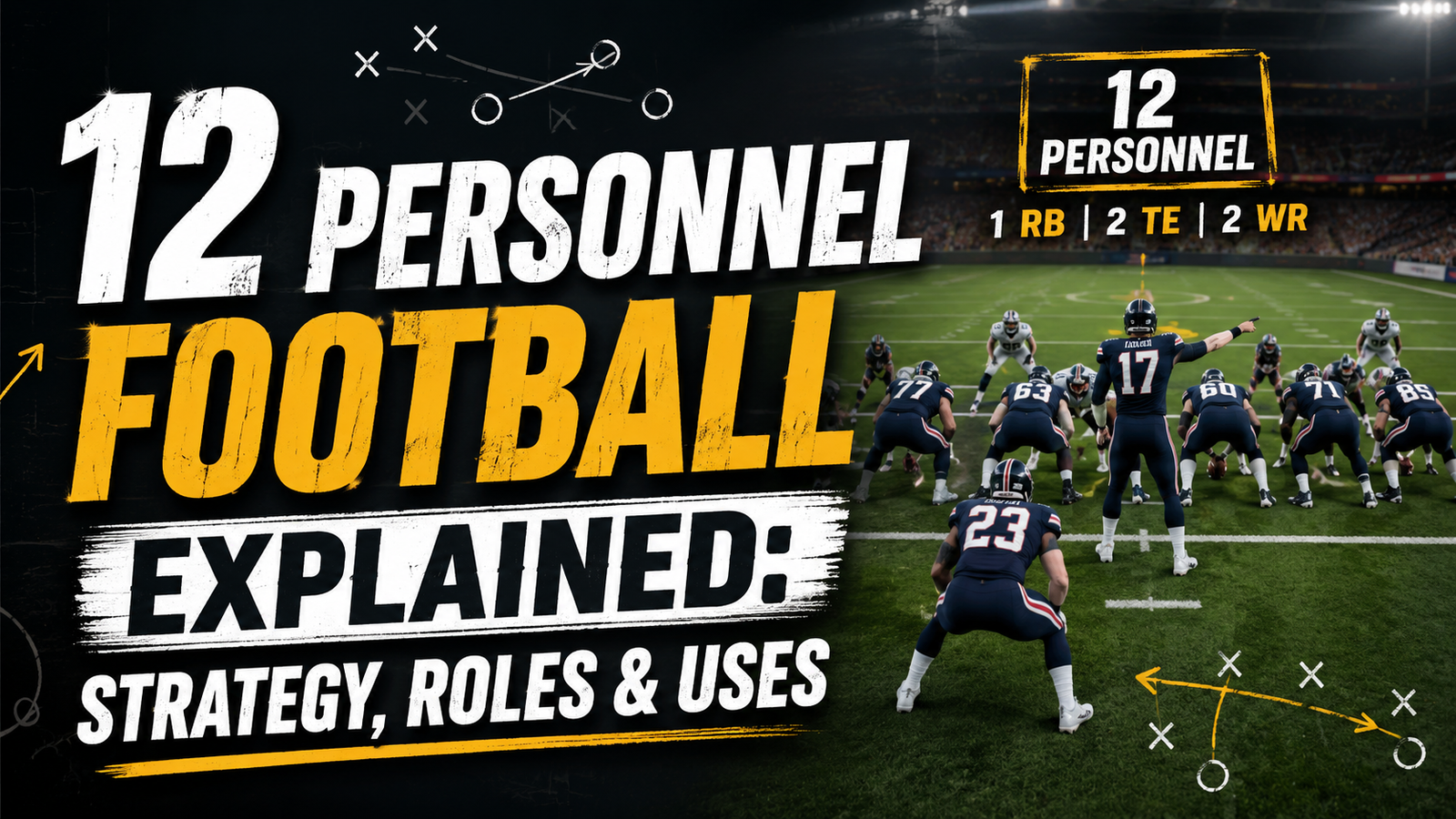
12 personnel football is a key offensive setup in modern American football. It uses one running back and two tight ends, which makes the offense flexible and strong. When people ask what 12 personnel football, they want a simple breakdown of this formation and how it works on the field. It connects power running with smart passing options, so teams can switch styles easily.
In 12 personnel football, coaches use what is 12 personnel in football as a base idea to confuse defenses. You may also hear what 12 personnel mean in football, and it simply points to one back and two tight ends on the field. Many fans also call it 12 personal by mistake, but the idea stays the same.
This setup helps teams balance runs and passes. In 12 personnel football, offenses can control tempo and create mismatches. That’s why coaches trust 12 personnel football so much.
12 personnel football is a simple way teams describe who is on the field. Coaches use it to organize the offense fast. When people first hear 12 personnel football, they often ask what it actually means. The answer is not complicated at all. It is just a personnel grouping used in American football.
In 12 personnel football, the offense lines up with one running back and two tight ends. That setup also includes two wide receivers. So when you hear 12 personnel in American football, think of a balanced formation that can run or pass with ease. Coaches love this because it keeps the defense guessing.
If you are wondering what 12 personnel are in football, it is really about structure. It tells you how many backs and tight ends are on the field. That simple code helps everyone understand the offense in seconds. This is why 12 personnel football explanations matter so much in modern playbooks.
The 12 personnel football formation gives coaches a flexible tool. It blends power and speed in one setup. You will often see it called a two tight end formation football, and it plays a big role in today’s game planning.
In this 12 personnel offensive package, the offense can shift between run and pass without changing players. That makes it hard for defenses to predict. Many teams use it as part of their 12 personnel offensive scheme because it supports both physical runs and creative passing plays.
A big reason coaches trust it is its balance. The 12 personnel offensive sets allow tight ends to line up in different spots. They can block on the line or move into routes like receivers. This flexibility makes the 12 personnel football formation a key part of modern strategy.

The biggest strength of 12 personnel football is balance. It keeps defenses unsure about what is coming next. That is why many coaches rely on the 12 personnel offensive strategy in key situations.
In the run game, this setup often becomes a 12 personnel run heavy offense. With two tight ends, teams get extra blockers at the line. That helps create strong inside runs and power plays, especially in short-yardage situations.
In the passing game, things change again. The 12 personnel passing concepts open space for tight ends to create mismatches. Defenders struggle because they must cover bigger players who can also run routes. That is why the 12 personnel vs 11 personnel debate is so important in modern football.
Overall, the 12 personnel football formation shifts the rhythm of the game. It forces defenses to stay honest, because both the run and pass are always a real threat.
In 12 personnel football, roles become very clear but also very flexible. The offense depends heavily on timing, strength, and smart movement. That is why 12 personnel football works so well in balanced playbooks.
The tight ends carry a huge load in this setup. In a 12 personnel football formation, they block like linemen on one play and act like receivers on the next. This is why coaches trust the role of tight ends in 12 personnel so much. One tight end often stays inline, while the other moves out to create space or run routes.
This flexibility creates real confusion for defenses. It also supports football formations with two tight ends, where mismatches become the main weapon. A strong tight end can change the entire rhythm of the drive.
The running back in 12 personnel football handles both power and patience. In a 12 personnel offensive scheme, the back must read blocks quickly and choose lanes with confidence. This is not just about running straight ahead.
Often, the back works in a 12 personnel run heavy offense, especially when teams want to control the clock. But he also stays active in protection and short passing plays. That balance keeps the offense stable and unpredictable.
Coaches love 12 personnel football when the pressure is high. It gives them control without revealing too much. That is why NFL 12 personnel usage often increases in third downs, red-zone drives, and close games.
One big reason teams rely on this setup is adaptability. When coaches ask why teams use 12 personnel formation, the answer is simple: it works in almost every situation. It supports both run and pass without substitutions.
In key moments, offenses can disguise plays better. The defense cannot easily guess if a run or pass is coming. This is why 12 personnel offensive strategy becomes a go-to option in tight games.
A good 12 personnel football playbook ideas section always focuses on balance and deception. This setup lets coaches design creative drives that mix power runs and layered passing.
Offensive coordinators often build plays around motion and mismatches. In 12 personnel football, tight ends may shift before the snap to confuse coverage. This creates space for easy reads.
Some of the best designs include play-action passes, inside zone runs, and quick seam routes. These are part of strong 12 personnel passing concepts that stretch defenses vertically and horizontally.
A strong drive using 12 personnel offensive sets focuses on rhythm. The offense may start with runs, then shift into short passes to keep defenders honest. This keeps the defense reacting instead of attacking.
When used correctly, 12 personnel football helps offenses stay on schedule. It creates steady progress down the field instead of risky, high-variance plays.
12 personnel football gives offenses a strong mix of power and flexibility. Coaches like it because it can attack defenses in different ways without changing players. Still, it is not perfect, and every strength comes with a trade-off.
One major advantage is balance. In 12 personnel football, offenses can run or pass with equal confidence. The defense cannot easily predict the next move. That uncertainty creates real stress for opponents.
Another big plus is the run game. A 12 personnel offensive strategy often turns into a 12 personnel run heavy offense when needed. Two tight ends help create extra blocking power at the line of scrimmage, which opens strong inside running lanes.
The passing game also benefits. With a 12 personnel passing concepts setup, tight ends can move into mismatches against slower linebackers or smaller defensive backs. That gives quarterbacks easier throwing windows.
However, 12 personnel football is not always ideal. The biggest issue is specialization. It does not lean fully into the run or the pass. So when a team needs extreme speed or maximum blocking, it can feel limited.
This shows up in situations like comeback drives. A pure passing attack may prefer lighter groupings, while a 12 personnel offensive scheme can feel a bit slower in tempo. That can hurt urgency when time is tight.
Another drawback is predictability against elite defenses. Smart coordinators study 12 personnel vs 11 personnel matchups and adjust quickly. If a team lacks strong tight ends, the whole system loses its edge.
12 personnel football stands out because it blends strength and flexibility, but comparing it to other formations shows where it shines and where it falls short.
The most common comparison is 12 personnel vs 11 personnel. In 11 personnel, offenses use three wide receivers, which creates more speed and spacing. In contrast, 12 personnel football formation uses two tight ends, which adds blocking strength and physical presence.
That difference changes the entire style of play. Teams using 12 personnel offensive sets tend to run more balanced or power-based offenses, while 11 personnel favors spread passing attacks.
Against lighter formations, 12 personnel football in American football feels more physical. It wins at the line of scrimmage and controls tempo. However, it may struggle against fast nickel defenses that spread the field.
This is why coaches carefully choose when to use a 12 personnel offensive package. It is not just about preference. It is about matchup control and game situations.
In tight spaces near the end zone, 12 personnel football becomes extremely valuable. The field shrinks, and physical play matters more than speed.
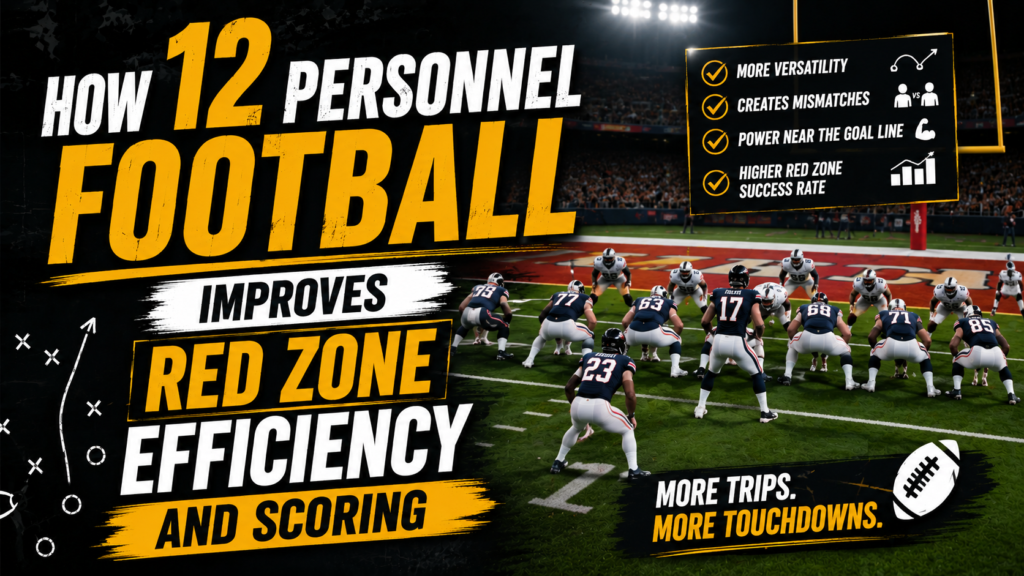
A 12 personnel red zone offense creates mismatches right away. Tight ends become major targets because defenders must choose between size and coverage ability. That decision often favors the offense.
The running game also becomes stronger. With extra blockers, a 12 personnel football formation helps power runs succeed even in crowded areas. That is why teams often rely on it inside the 20-yard line.
The biggest reason teams use 12 personnel offensive strategy in scoring situations is control. It reduces mistakes and increases execution reliability. Plays are simpler, but more effective.
When coaches design 12 personnel playbook ideas, they often include quick passes, play-action, and tight end leaks. These plays work well because defenses are already packed near the line.
In the end, 12 personnel football explained simply is about winning short-field battles. It gives offenses structure, power, and smart mismatches when scoring matters most.
In 12 personnel football, blocking is where everything starts. If the blocks don’t work, nothing else matters. This setup relies on strength at the line and smart angles to control defenders early.
In a typical 12 personnel football formation, the offensive line handles the primary push. But the real edge comes from the tight ends. They act like hybrid blockers, which is why the 12 personnel tight end formation feels so powerful.
One tight end often stays inline to seal the edge. The other moves around to block linebackers or kick out defenders on run plays. This creates flexible angles that support a strong 12 personnel offensive scheme.
You’ll often see this used in a 12 personnel run heavy offense, where every block matters. The goal is simple: win the line of scrimmage and open clean running lanes.
The passing side of 12 personnel football is more creative than many fans expect. It doesn’t just rely on tight ends blocking. It uses them as real threats.
In 12 personnel passing concepts, tight ends often run seam routes, crossers, and delayed releases. This creates matchup problems because linebackers struggle to keep up.
When defenses adjust, quarterbacks exploit space underneath. That is why 12 personnel offensive strategy works so well in medium-yardage situations. It forces defenders to choose between size and speed.
You’ll also see motion used before the snap. A tight end may shift across the formation to reveal coverage. This helps the quarterback read the defense quickly and adjust the throw.
The run game is where 12 personnel football truly shines. It adds extra muscle without sacrificing too much flexibility. That balance makes it hard to stop.
With two tight ends, the offense naturally gains extra blockers. That is why many teams turn to a 12 personnel run heavy offense on early downs. It helps control tempo and wear down defenses.
Inside zone and power runs become very effective here. Tight ends seal edges while linemen drive forward. This creates clean lanes for the running back to attack.
Because of this structure, 12 personnel football formation often forces defenses to bring heavier personnel. That opens even more space if the offense decides to pass later.
In simple terms, 12 personnel football wins games by controlling the trenches first, then expanding the attack when the defense starts to adjust.
12 personnel football has become a smart tool in the NFL, even as offenses get more spread out. Teams don’t use it every snap, but they lean on it when they want control, balance, and matchup advantages.
When people talk about NFL 12 personnel usage, they usually point to teams that value strong tight ends. These offenses love creating mismatches instead of just chasing speed.
In 12 personnel football, teams like to use two tight ends who can both block and catch. That makes the formation hard to predict. One play looks like a run. The next turns into a vertical pass.
Coaches use it because it simplifies decisions. With 12 personnel offensive strategy, the offense forces the defense to stay honest. You cannot fully commit to stopping the run or the pass.
The story of 12 personnel football has changed a lot over time. Years ago, it was a base formation for many offenses. Today, it is more of a strategic weapon.
In older systems, 12 personnel offensive sets focused heavily on power running. Teams lined up and tried to physically dominate the defense. That was the identity of early 12 personnel run heavy offensive approaches.
Now things look different. Modern offenses use motion, spacing, and creative passing ideas. A 12 personnel offensive scheme today often looks like a hybrid system. It blends old-school strength with new-school spacing.
This evolution also connects with 12 personnel passing concepts, where tight ends stretch the field vertically. Offenses no longer stay predictable, and that makes this formation even more dangerous.
Defenses know that 12 personnel football creates problems. So they adjust their personnel and coverage rules to fight back.
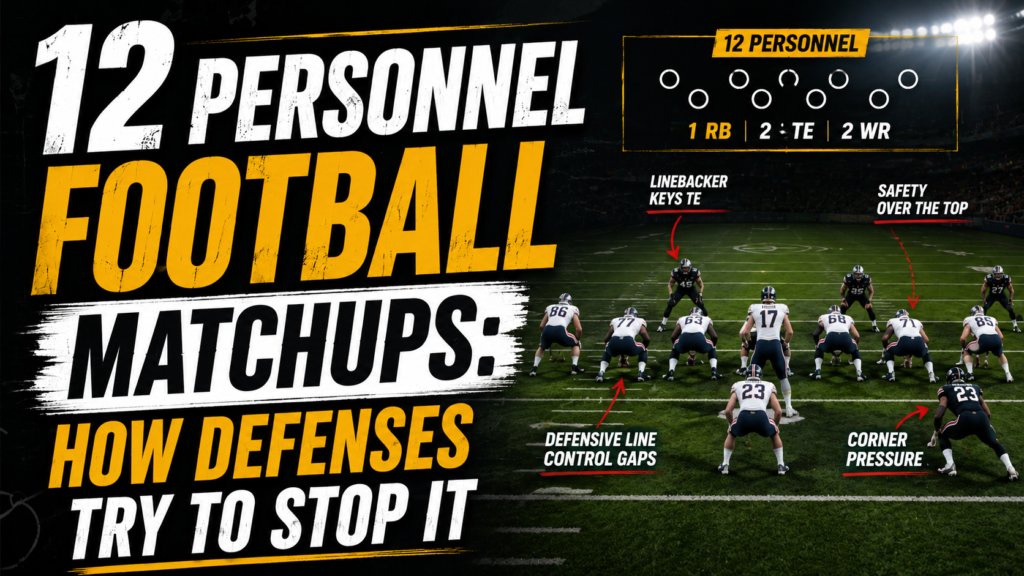
The first move defenses make is adding size. Against a 12 personnel tight end formation, they often bring in heavier linebackers or extra safeties near the box. This helps them handle the physical side of the game.
Another common strategy is studying 12 personnel vs 11 personnel tendencies. Defenses try to predict when a run is coming and when a pass is likely. If they guess right, they gain a big advantage.
Still, it is not easy. A smart 12 personnel football formation forces hesitation. One false step, and a tight end is open downfield or a running lane breaks wide open.
That is why coaches spend so much time on how to defend 12 personnel formations. The goal is simple but tough: stay balanced, stay disciplined, and don’t overreact.
It works because it blends power and flexibility in one package. The offense can run or pass without changing personnel.
Teams use it to control matchups and tempo. It helps offenses stay unpredictable and keeps defenses guessing every snap.
It supports both styles, but many coaches lean on it for balanced attack. It can shift easily between run-heavy and pass concepts.
Defenses often add bigger linebackers or extra safeties. They try to match physical strength without losing coverage ability.
Tight ends become key weapons in blocking and receiving roles. They create mismatches against slower linebackers and smaller defenders.
Coaches often use it in early downs, third downs, and red-zone situations. It gives them stability and play-calling flexibility.
Yes, but it is usually more controlled than spread formations. Teams use it when they want balance, not extreme tempo.
12 personnel football remains one of the most reliable ideas in modern offenses. It gives teams balance, control, and smart options on every snap. When you understand 12 personal football, you start seeing how coaches build simple but powerful game plans.
Many fans still ask what is 12 personnel in football, and the answer always comes back to structure and flexibility. It shows what 12 personnel mean in football in a clear way: one back, two tight ends, and a system that can switch between run and pass smoothly. Even when people say 12 personal, they still refer to the same idea.
In the end, 12 personnel football helps offenses stay unpredictable and steady. It explains 12 personal football in the simplest form possible. Once you understand 12 personnel football, the game feels easier to read. That is why 12 personal football continues to stay important at every level.