Physical Address
304 North Cardinal St.
Dorchester Center, MA 02124
Physical Address
304 North Cardinal St.
Dorchester Center, MA 02124
Seeing 304 Meaning pop up in a text or comment can leave you scratching your head. It looks like a simple number, but online slang often hides a different message. If you’ve recently wondered what is a 304, you’re definitely not alone. This number has become a coded expression in online conversations, especially on social media.
So, what’s a 304 supposed to mean? The answer depends on the conversation and the person using it. Some people use it as slang, while others may simply recognize 304 as a number with a completely different meaning. That’s why context matters when you’re trying to understand what does 304 mean.
If you’ve searched whats a 304 or what is 304, this guide will clear things up. You’ll learn where the slang comes from, how people use it in texts and social media, and what tone it can carry. By the end, 304 Meaning won’t feel like a mystery anymore.
In online slang, 304 is usually a coded reference to “hoe.” It’s generally used to describe or insult a woman perceived as promiscuous. Because the expression can be offensive, you shouldn’t automatically assume it’s harmless whenever you see it online.
The slang meaning comes from a visual trick rather than the pronunciation of the number. On a traditional calculator display, turning 304 upside down makes the digits resemble “hoe.” This calculator-word tradition existed long before today’s social media trends.
For example:
“Why is everyone calling her a 304?”
Here, the number isn’t being used mathematically. It’s functioning as internet slang.
However, context remains important. If someone says “Room 304,” they’re almost certainly talking about a location rather than using slang.
The 304 meaning slang users usually ask about is a coded insult. It appears in comments, memes, captions, chats, and online discussions.
The term gained renewed attention through social media during the early 2020s. It became especially visible in certain discussions about dating, relationships, and women. It has also been used as a form of “algospeak,” where users replace potentially restricted words with alternative spellings, symbols, or numbers.
That doesn’t mean every person using 304 is trying to bypass moderation. Some people simply picked up the term from memes or other users.

Imagine someone comments:
“He said she’s a 304.”
The speaker isn’t talking about a building or a technical code. They’re using 304 slang meaning to insult or label the woman being discussed.
Another example could be:
Person A: “Why did he put 304 in his caption?”
Person B: “It’s internet slang. He’s using it as a coded insult.”
The important clue is the surrounding conversation. If people are discussing dating, relationships, or someone’s behavior, the slang interpretation becomes more likely.
There are several reasons people use numbers instead of directly writing certain slang words.
First, coded language can feel less obvious. A reader unfamiliar with the expression may simply see three digits. Someone familiar with internet slang understands the reference immediately.
Second, online communities sometimes develop alternative spellings or codes around words that may trigger moderation. This broader practice is often called algospeak. The goal can be avoiding filters, joining a trend, or making a message appear less direct.
There is also a simpler explanation: people copy what they see.
For example, someone may encounter “304” in a TikTok comment, learn the meaning, and start using it without knowing the calculator origin. Internet slang spreads remarkably fast that way.
On TikTok, 304 meaning usually refers to the same coded slang definition. You may encounter it in comments, captions, memes, videos, or discussions involving relationships and dating.
The platform helped bring the expression to a much wider audience. Some users use it negatively, while others use it jokingly or as part of online discussions about sexuality and relationships. The hashtag #304tok has also been associated with creators discussing sex work and related experiences.
So, don’t assume every appearance has exactly the same intention.
For example:
“The comments keep calling her a 304.”
That’s probably an insult.
But:
“I found a video explaining 304 slang.”
Here, the person is simply discussing the term.
On Instagram, the 304 meaning on social media is generally similar to its meaning on TikTok. It can appear under Reels, memes, public posts, or discussions about dating and relationships.
Because Instagram comments are often short, people may use coded expressions without explaining them. That can make the number especially confusing if you’ve never encountered the slang before.
For example:
“Bro really called her a 304 💀”
The number is being used as slang rather than referring to an address or numerical value.
Still, Instagram also contains plenty of ordinary numerical references. A caption mentioning “304” could simply refer to a room, jersey, product, or another number. Context tells you which interpretation makes sense.
The 304 meaning in texting is usually the same slang meaning when the number appears in a personal message.
For example:
Friend: “Did you see what he called her?”
You: “No, what?”
Friend: “He called her a 304.”
In this case, the number clearly functions as a label rather than a normal number.
You may also see it used without much explanation:
“She’s a 304.”
That usage is generally derogatory.
If someone sends you just “304” with no context, don’t panic or immediately assume the worst. They could be referring to something completely different. Asking what they mean is often the easiest solution.
The 304 meaning in gaming isn’t a standard gaming-specific term. When gamers use it as slang, they’re generally borrowing the broader internet meaning.
You might see it in:
For example:
“He keeps calling every character a 304.”
That’s likely ordinary internet slang being used inside a gaming conversation.
However, gamers also use numbers for usernames, team references, room numbers, player IDs, scores, and inside jokes. So the surrounding conversation matters even more in this setting.
If you’re a developer, web designer, or someone looking at browser logs, 304 may have nothing to do with slang.
In technology, HTTP 304 Not Modified is a legitimate HTTP response status. It tells a browser that the requested resource hasn’t changed since the cached version was validated. The browser can therefore use its existing cached copy instead of downloading the resource again.
In simple terms, think of it like this:
You visit a website today. Your browser saves certain files. When you return later, the server checks whether those files changed. If they haven’t, it can respond with 304 Not Modified rather than sending the same resource again.
That can reduce unnecessary data transfer and make web browsing more efficient.
HTTP 304 Not Modified doesn’t mean the website is broken. It’s a normal response connected with browser caching.
A simplified process looks like this:
HTTP 304 responses commonly work with conditional requests involving headers such as If-None-Match or If-Modified-Since.
So, if you see 304 Not Modified in browser developer tools, don’t confuse it with the slang meaning.

The 304 meaning isn’t limited to internet slang or web technology.
Depending on where you see it, 304 could simply identify something specific. For example, it might be:
There’s also 304 stainless steel, which is a widely used grade of austenitic stainless steel. So someone discussing cookware, manufacturing, or metal products may use “304” in a completely unrelated way.
This is why searching for what is 304 without context can produce several very different answers.
Coded slang can make communication feel like an inside joke. People who understand the code feel like they’re part of the same online community.
With 304, there can also be a layer of indirectness. Writing a number may feel less blunt than writing the underlying insult. However, changing the spelling doesn’t necessarily remove the insult itself.
People may use the term because they:
That last point matters. Slang often travels farther than its original context.
The popularity of 304 shows how quickly online language can evolve.
A number that looks meaningless can become recognizable slang once enough people share the same interpretation. The meaning isn’t contained in the digits themselves. It comes from the community using them.
This is common in digital communication. People use abbreviations, emojis, altered spellings, numbers, and inside jokes to communicate quickly.
For example, a new user might see “304” and think:
“Why is everyone posting a room number?”
An experienced user may instantly recognize the slang. Both people are looking at exactly the same number, but their cultural context changes its meaning.
If you’re using 304 to describe another person, especially a woman, it’s safest to recognize that the slang can be derogatory.
The coded format doesn’t automatically make the underlying insult polite. If you’re talking to someone you don’t know well, using the term can easily come across as disrespectful.
In most professional or public situations, avoid it altogether.
If you’re discussing the term itself, however, there’s nothing wrong with explaining its meaning. For example:
“This article explains what 304 means in internet slang.”
That’s a discussion about the expression rather than an insult directed at someone.
One common mistake is assuming 304 always means the same thing.
It doesn’t.
Someone working in web development may use 304 to mean Not Modified. Someone discussing cookware may mean stainless steel. Someone posting about a hotel may mean a room number.
Another mistake is assuming everyone knows the slang.
Internet vocabulary changes quickly. A phrase that feels obvious in one community may be completely unfamiliar elsewhere.
A third mistake is treating 304 as harmless simply because it’s a number. When used as slang, it carries the meaning associated with the underlying word.
Numbers have been used online for many different purposes. Some carry affectionate meanings, some are technical, and others are slang.
| Code | Common Meaning | Typical Context | General Tone |
| 304 | Coded slang for “hoe” | Social media and online slang | Often derogatory |
| 404 | Page or resource not found | Web technology and internet jokes | Technical or humorous |
| 143 | “I love you” | Texting and messaging | Affectionate |
| 420 | Cannabis-related reference | Internet culture and memes | Casual |
| 666 | Symbolic or cultural number | Religion, pop culture, entertainment | Context-dependent |
The key difference is context. 304 can be slang, while other numbers may have technical, cultural, or affectionate meanings.
So if someone sends you a number, don’t interpret it automatically. Look at the conversation around it.
The tone of 304 slang depends on who says it, who receives it, and why it appears.
The same code can be used jokingly between people who understand the reference. It can also be used as a serious insult. Without voice tone or facial expressions, text can make that distinction harder to judge.
The number can be completely neutral when it refers to something unrelated to slang.
Examples include:
In these cases, there is no insult involved.
When someone calls another person a 304, the meaning is generally negative.
The speaker is using the code as a derogatory label associated with sexual behavior. Because of that, the term can be insulting or objectifying.
Some users use 304 jokingly in memes or casual conversations.
However, humor depends on the audience. A joke that seems funny to one group may sound insulting to another person.
That’s especially true when the joke targets someone’s sexuality or reputation.
Words and codes don’t exist in a vacuum. The emotional effect often depends on the relationship between the people using them.
If close friends jokingly use slang with each other, both people may understand the intended tone. But when a stranger uses the same term toward someone, it can feel much more aggressive.
That difference is important with 304.
The code can create a layer of distance because it doesn’t directly spell out the insult. Still, the person receiving it may understand exactly what the speaker means.
In other words, hiding the word doesn’t necessarily soften the message.

You don’t have to respond with another insult. In many cases, a calm question works better.
Your response can depend on the situation and how seriously you want to handle it.
If you’re genuinely confused, keep it simple:
“Wait, what does 304 mean?”
Or:
“I don’t understand what you mean by that.”
This gives the other person a chance to explain themselves.
If you understand the slang but don’t want an argument, you can stay direct:
“I’m not sure why you chose to call me that.”
That response acknowledges the comment without escalating the situation.
If the conversation is clearly lighthearted and you’re comfortable joking back, you could say:
“Are we talking slang or HTTP status codes?”
That works because 304 genuinely has a technical meaning too.
If someone is deliberately insulting you, a calm answer can shut down the exchange:
“If you have something to say, say it clearly.”
You don’t need to match someone’s hostility. Sometimes refusing to play along makes the strongest point.
Internet slang doesn’t spread evenly. A term may be common in one online community and almost unknown in another.
Age, platform, location, and interests can all influence slang knowledge. Someone who spends hours on TikTok may recognize 304 immediately. Another person may see the same number and think of HTTP caching or a room number.
The meaning can also change within a community.
Some people use 304 as an insult. Others discuss it academically or use it while talking about online culture. Some communities connected to #304tok have used the term while discussing sex work and related experiences rather than simply directing it at another person.
So, always consider the context before deciding what someone means.
In slang, 304 can function as an insult when it’s directed at someone. It is not inherently offensive when used as an ordinary number or technical code.
The important distinction is how the number is being used.
If someone texts “Room 304,” there’s no slang involved. If someone says “She’s a 304,” they’re using the internet slang meaning.
Look at the words surrounding the number.
Signs that it may be slang include:
If the number appears beside words like “room,” “HTTP,” “server,” or “steel,” another meaning is much more likely.
When a girl or guy uses 304 in slang, the basic coded meaning doesn’t automatically change.
A woman might use it jokingly, critically, or while discussing the term itself. A man might use it as an insult or meme reference. The speaker’s gender doesn’t determine the definition.
For example:
“My friend keeps saying 304 in every meme.”
That doesn’t tell you whether the speaker is insulting someone. You need the surrounding context.
No. 304 meaning in conversation can vary from person to person.
Some people know the slang immediately. Others may recognize it as a technical number or simply see it as an ordinary sequence of digits.
That’s why asking for clarification is reasonable when you’re unsure.
If you’re writing about internet slang, you can mention 304 while clearly explaining what you’re discussing.
But if you’re thinking about using it as a label for another person, consider your audience first.
A number-based insult may seem clever because it looks indirect. The person receiving it may not see it that way.
Clear communication usually works better than coded insults.
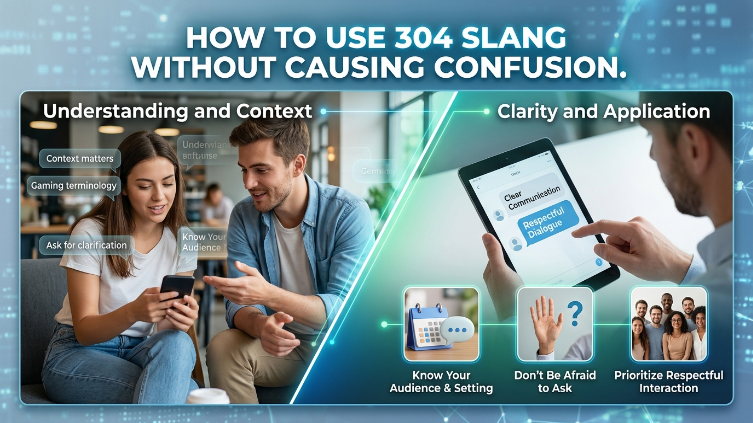
You should generally avoid using 304 as an insult when:
If you’re simply explaining the term, that’s different. In an educational context, identifying the slang meaning helps readers understand what they’ve encountered.
In texting slang, 304 usually refers to “hoe,” a derogatory term often aimed at women perceived as sexually promiscuous.
304 comes from the old calculator trick where flipping the number upside down makes the digits resemble the letters in “hoe.”
Yes, when used as slang toward a person, 304 is generally derogatory and can be intended as a sexualized insult.
On TikTok, 304 commonly appears as coded internet slang, especially in memes, comments, and discussions involving dating or sexuality.
HTTP 304 Not Modified means a cached web resource remains current, so the server doesn’t need to retransmit that resource.
On Instagram, 304 usually has the same slang meaning, although context may indicate an ordinary number or unrelated reference.
No. 304 can represent slang, HTTP status codes, room numbers, product identifiers, or other numerical references.
The 304 Meaning depends on where you see the number. In internet slang, it commonly works as a coded insult. However, 304 can also mean something completely different in technology or everyday life. If you’ve searched what is a 304 or what’s a 304, the surrounding words usually give you the answer.
So, what does 304 mean in a text or comment? Most often, it points to the slang meaning when someone uses it to describe another person. Still, don’t jump to conclusions. Whats a 304 could simply be a room number, product number, or another ordinary reference.
Now you know what is 304 and why context matters. Whether you found it on TikTok, Instagram, in a text, or while reading about HTTP, the situation tells you which meaning applies. When in doubt, ask for clarification rather than assuming.