Physical Address
304 North Cardinal St.
Dorchester Center, MA 02124
Physical Address
304 North Cardinal St.
Dorchester Center, MA 02124
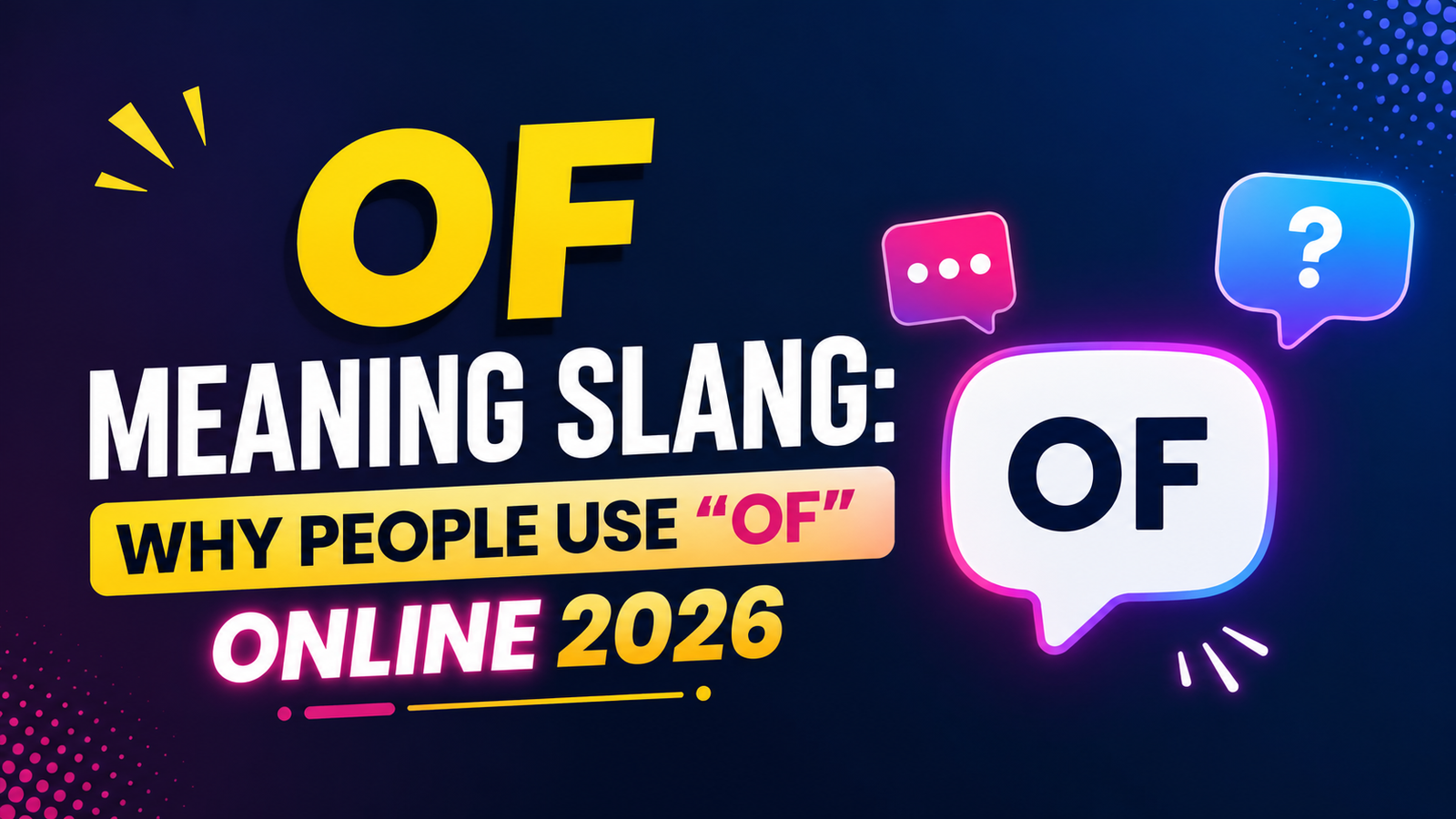
OF meaning slang is a common topic in modern online chats. Many people search for OF meaning slang because this short term appears on TikTok, Instagram, and other platforms. The meaning can change based on context.
In simple words, OF meaning slang often connects to online culture. Some users also ask about what diddy means, buzz meaning, or words like zesty because internet language changes quickly.
Understanding OF meaning slang helps you follow social media conversations better. Whether you see an OF page, a comment, or a private message, context matters. Internet words can feel confusing, but learning them makes online communication easier.
In online slang, “OF” most commonly refers to OnlyFans, a subscription-based content platform where creators share exclusive content with subscribers.
However, the meaning of OF abbreviation can change depending on the situation. In some cases, people use it as a short form of the word “of” while texting or typing quickly.
People often search for OF meaning because they see it in TikTok comments, Instagram DMs, text messages, and social media conversations. The meaning usually becomes clear by looking at the words around it.
The abbreviation “OF” has a few common meanings in internet communication:
For example:
“People are talking about his OF page.”
“She shared her OF link with followers.”
“That was one of the best moments of the year.”
In most social media slang conversations, people use OF when they are talking about OnlyFans. However, the exact meaning depends on the context, platform, and type of conversation.
Understanding OF meaning becomes easier when you see how people use it in real conversations. The abbreviation often appears in social media comments, private messages, and online conversations.
For example:
WhatsApp message:
Person A: “Did you see her new OF?”
Person B: “Yes, she shared her OF link yesterday.”
Instagram DM:
Person A: “Why is everyone talking about his profile?”
Person B: “He started an OF account.”
TikTok comment:
User 1: “How do influencers make money online?”
User 2: “Many creators use OF for extra income.”
These examples show that OF slang usually refers to OnlyFans when people discuss creators, followers, or online earnings. However, the meaning can still change depending on the conversation.
On platforms like TikTok and Instagram, OF meaning slang usually refers to OnlyFans. Users often mention it in captions, comments, and social media conversations when discussing creators or exclusive content.
The abbreviation became popular because internet users prefer short forms and quick typing. Instead of writing “OnlyFans,” many people simply write “OF” in online communication.
You may see phrases like:
However, context matters. Not every use of OF relates to the platform. Sometimes it can simply mean the normal word “of” in text messages or casual communication. Understanding the surrounding words helps you identify the correct meaning.
The slang meaning of OF became popular with the growth of OnlyFans, a content subscription platform launched in 2016. The platform allowed creators to share exclusive content directly with subscribers through paid subscriptions.
As OnlyFans grew, internet users started shortening the name to “OF” because shorter words are easier to use in fast online conversations. This is common in modern internet language, where people often create abbreviations and digital shorthand for popular platforms, trends, and online communities.
Over time, OF slang spread across different social media platforms, including:
The abbreviation became a familiar part of internet vocabulary, especially among younger users, influencers, and content creators. It also became connected with topics like the creator economy, online entrepreneurship, and digital income.
Today, OF meaning can have different interpretations depending on the context. While many people use it when talking about an OnlyFans account, others may use it simply as a short form in texting. The meaning usually depends on the conversation, platform, and audience.
Understanding OF meaning slang becomes much easier when you see how people use it in everyday conversations. Like many other internet abbreviations, the meaning of OF depends on the platform, the people involved, and the topic being discussed.
People often use OF slang in social media conversations, private messages, and casual chats. It may appear when users talk about creators, online income, or digital content. Below are some common examples from different platforms.
Person A:
“Did you hear she started an OF account?”
Person B:
“Yeah, I saw her profile online.”
In this conversation, OF refers to an OnlyFans account. People use the abbreviation because it is shorter and faster to type.
Person A:
“Why is everyone sharing his profile?”
Person B:
“He posted his OF link on Instagram.”
Here, OF means an OnlyFans page or creator profile. Users often mention it while discussing influencers or online creators.
User 1:
“How do some creators make money online?”
User 2:
“Many use OF and other platforms for income.”
On TikTok, OF slang often appears in comments about the creator economy, online fame, and content creation.
Person A:
“What does OF mean in this message?”
Person B:
“It depends, but they are probably talking about OnlyFans.”
These examples show why context matters. The same abbreviation can have different meanings, so checking the conversation helps you understand the real message behind OF meaning slang.
The use of OF meaning slang shows how internet culture has changed the way people communicate and discuss online identities. A simple abbreviation can carry different feelings depending on who uses it and how the conversation presents it.
For some internet users, OF connects with ideas like online fame, digital careers, independence, and entrepreneurship mindset. Many creators see platforms like OnlyFans as part of the growing creator economy, where people build personal brands and earn digital income through content creation.
At the same time, the term can create different reactions. Some people feel curiosity when they see OF mentioned online, while others connect it with social discussions, internet humor, memes, or gossip culture. Public perception often depends on personal beliefs, cultural background, and online experiences.
The emotional meaning of OF also changes across different digital communities. In some conversations, it represents a business opportunity and creative freedom. In others, it may lead to discussions about online reputation, digital privacy, and social acceptance.
Because internet language keeps evolving, OF slang meaning is not only about the abbreviation itself. It also reflects how people view online fame, content sharing, and the changing world of digital communication.
The meaning of OF meaning slang can change depending on where you see it. Like many internet abbreviations, OF gets its meaning from the conversation, platform, and people using it.
In casual chats, social media posts, and online communities, users often rely on short forms because they make communication faster. However, the same abbreviation may not fit every situation.
On platforms like TikTok, Instagram, and Twitter, OF usually refers to OnlyFans. Users often mention it in comments, captions, and online discussions about creators, influencers, and exclusive content.
For example:
“Her OF page is getting popular.”
“He shared his OF link with followers.”
In these situations, OF connects with topics like content creators, online fame, and the creator economy.
Among friends, OF slang often appears during casual communication. People may discuss influencers, online trends, or someone’s digital presence.
For example:
“Did you see his profile?”
“I heard she started an OF account.”
The meaning is usually clear because friends already understand the topic being discussed.
Using OF in professional communication can create confusion. In formal writing, emails, or business discussions, people usually avoid unclear abbreviations.
If someone needs to mention the platform, writing OnlyFans is more professional and easier to understand.
The tone of an OF conversation depends on the situation. Sometimes people use it for jokes, memes, or internet humor. Other times, they discuss serious topics like digital careers, online business, and monetization.
Because OF has different meanings, understanding the context helps you avoid misunderstandings in online communication.
Because OF meaning slang has multiple uses, people often misunderstand what someone means when they see this abbreviation online. Short forms can be confusing, especially when users from different digital communities use the same term in different ways.
The meaning of OF depends on the conversation, platform, and surrounding words. Here are some common misunderstandings about OF slang.
Many people assume that OF always refers to OnlyFans. While this is the most common slang meaning, it is not the only use.
In some cases, OF simply means the word “of” in quick typing or regular sentences.
Example:
“Best moments OF the year.”
Here, OF has no connection with the platform. It is just a shortened version used in casual communication.
Another common mistake is thinking OF always relates to adult content discussions. Although OnlyFans became known for some types of adult content, the platform also includes creators who share different types of content.
Some creators use it for:
The meaning depends on the creator, content, and conversation.
Internet users often mix up OF with other social media abbreviations like OG meaning, OTF meaning, IG meaning, or DM meaning.
For example:
Understanding these internet abbreviations makes online communication easier.
Since OF is a short abbreviation, using it without context can create confusion. A person who sees “OF” in a message may not know whether it refers to OnlyFans, the normal word “of,” or another meaning.
That is why context-based meaning matters when reading social media conversations, text messages, and online expressions.
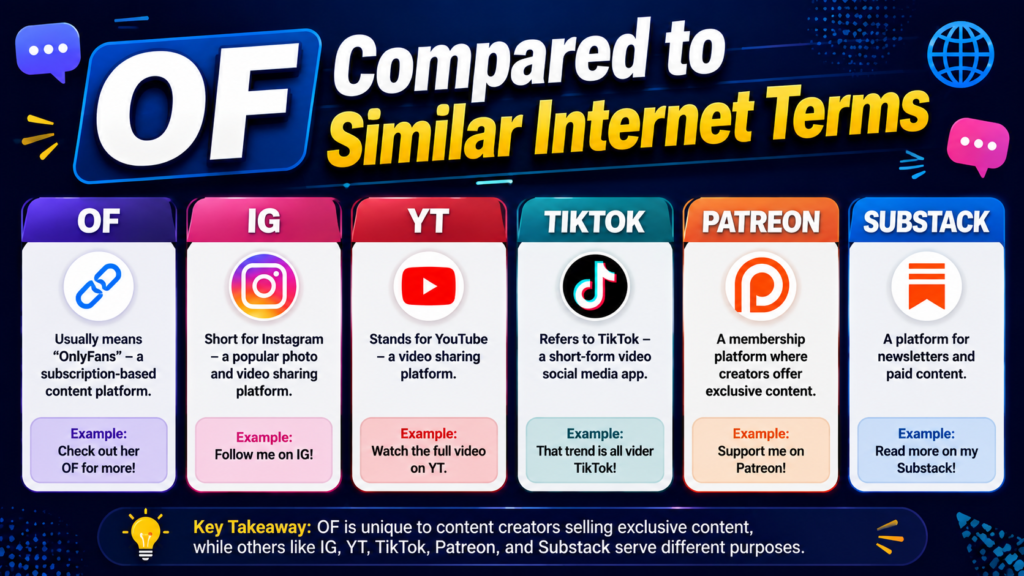
OF meaning slang is part of a larger group of internet abbreviations that people use in daily online communication. Just like other digital shorthand, OF helps users type faster and communicate quickly on social media platforms.
However, each abbreviation has its own meaning. Understanding the difference between these terms helps you follow online conversations more easily.
| Term | Meaning | Typical Use |
| OF | Usually refers to OnlyFans | Social media slang and creator discussions |
| OG | Original or highly respected person | Pop culture and internet culture |
| OTF | Often used as “Only The Family” or other meanings depending on context | Music and online communities |
| IG | Social media abbreviation | |
| DM | Direct Message | Private messages and online chats |
The main difference is that OF slang can have more than one meaning. In many conversations, it refers to an OnlyFans account, OF page, or creator profile. However, it can also appear as the normal word “of” in text messages.
Other internet abbreviations usually have a more fixed meaning. For example, IG is strongly connected with Instagram, while DM almost always means direct message.
As internet slang continues to evolve, new abbreviations appear across TikTok, Instagram, WhatsApp, and other digital communities. Learning these terms helps internet users understand modern online expressions and communicate more clearly.
As OF meaning slang became more common online, people started creating different phrases connected with the platform and its users. These variations appear in social media conversations, online forums, and discussions about creators.
Most OF-related terms describe different parts of the OnlyFans ecosystem, including creators, profiles, content, and subscriptions.
An OF account refers to a creator’s personal account on OnlyFans. Users may use this term when talking about someone’s profile or subscription page.
Example:
“She created an OF account to share exclusive content.”
An OF creator is someone who produces and shares content on OnlyFans. Many creators use the platform as part of their online business and content creation strategy.
An OF model usually refers to a person who creates photos, videos, or other exclusive content for subscribers.
An OF page means an OnlyFans profile or creator page. People often use this phrase when referring to where followers can find a creator.
An OF link is a URL that directs users to an OnlyFans profile or subscription page.
OF content refers to the material shared by creators on the platform. This may include exclusive videos, photos, updates, or fan content.
An OF leak describes unauthorized content sharing where someone distributes private creator content without permission. This raises concerns about online privacy and digital rights.
OF earnings refer to the income creators make through subscriptions, paid content, and other monetization methods.
OF promotion means advertising an OnlyFans profile through social media platforms, personal branding, or online communities.
An OF subscriber is a person who pays to access a creator’s content through an OnlyFans subscription.
These variations show how OF slang has become connected with the wider creator economy, digital careers, and online entrepreneurship. As internet vocabulary continues to change, new expressions often develop around popular platforms and online trends.
When someone uses OF meaning in a conversation, your response depends on the situation and your relationship with that person. Since OF can have different meanings, it is helpful to understand the context before replying.
In casual communication, people may mention OF while talking about social media, creators, online trends, or digital income. A simple and respectful response can keep the conversation comfortable.
If someone mentions OF casually, you can respond with:
In conversations with close friends, people may use internet humor or jokes. Some light responses include:
When discussing topics related to the creator economy, online business, or digital careers, a thoughtful response works better.
Examples:
If the topic involves someone’s personal choices, privacy, or online identity, it is better to stay respectful.
Examples:
The best way to respond to OF slang is to avoid quick assumptions. Understanding the context helps you communicate better across social media platforms, messaging apps, and online conversations.
The use of OF meaning slang can change across different regions and online communities. Although the abbreviation is recognized globally, people may view and discuss it differently depending on their culture, values, and internet habits.
As global internet usage grows, online expressions spread quickly between countries. However, cultural differences still influence how people understand and respond to terms connected with digital platforms.
In Western culture, especially within United States internet culture and European internet culture, OF is widely recognized as a reference to OnlyFans.
The term often appears in:
Many users connect OF with content creators, online entrepreneurship, and digital income opportunities.
In Asian online communities, OF slang is usually seen among English-speaking internet users. Younger audiences who spend time on international social media platforms may recognize the abbreviation through TikTok, Instagram, and online forums.
However, discussions around OF can vary because cultural attitudes toward online content and personal branding are different across regions.
In Middle Eastern internet culture, OF may be recognized by users who follow global online trends. However, conversations about the platform are often more private due to cultural sensitivities and different views on social acceptance.
People may discuss topics like online privacy, digital identity, and public perception when talking about such platforms.
Today, OF slang has become part of modern internet language across many digital communities. Younger users, influencers, and online creators often recognize the term because of the growth of social media platforms.
Even though the abbreviation has a common meaning, its interpretation depends on the audience, location, and conversation. Understanding these cultural differences helps internet users communicate more clearly in a connected digital world.
OF usually refers to OnlyFans in internet conversations. However, the meaning can change depending on the context, platform, or message.
No, OF does not always mean OnlyFans. Sometimes it is simply a short form of the word of in quick typing.
People use OF because it is shorter and faster. This OF meaning slang became popular through social media and online communication.
On TikTok and Instagram, OF often refers to OnlyFans pages or creators. Users mention it in captions, comments, and private messages.
Yes, OF can have different meanings across platforms. The correct OF meaning slang depends on the surrounding words and conversation.
OF is usually avoided in professional communication because it can confuse readers. Formal writing normally uses complete words instead of abbreviations.
You can understand OF by checking the topic and context. The OF meaning slang becomes clear when you read the full conversation.
The internet changes fast, and of meaning slang is a good example of modern online language. People see OF on social media and often want to know its real meaning. The term can have different uses based on context.
Understanding of meaning slang helps users follow online conversations better. Words like huzz meaning, zesty, and what diddy mean also show how quickly internet vocabulary changes. Each slang term has its own background.
In most cases, of meaning slang connects with online platforms and conversations. If you see an off page, check the context first. Learning these terms makes digital communication easier and helps you understand new internet trends.